
A Love that Runs with Open Arms
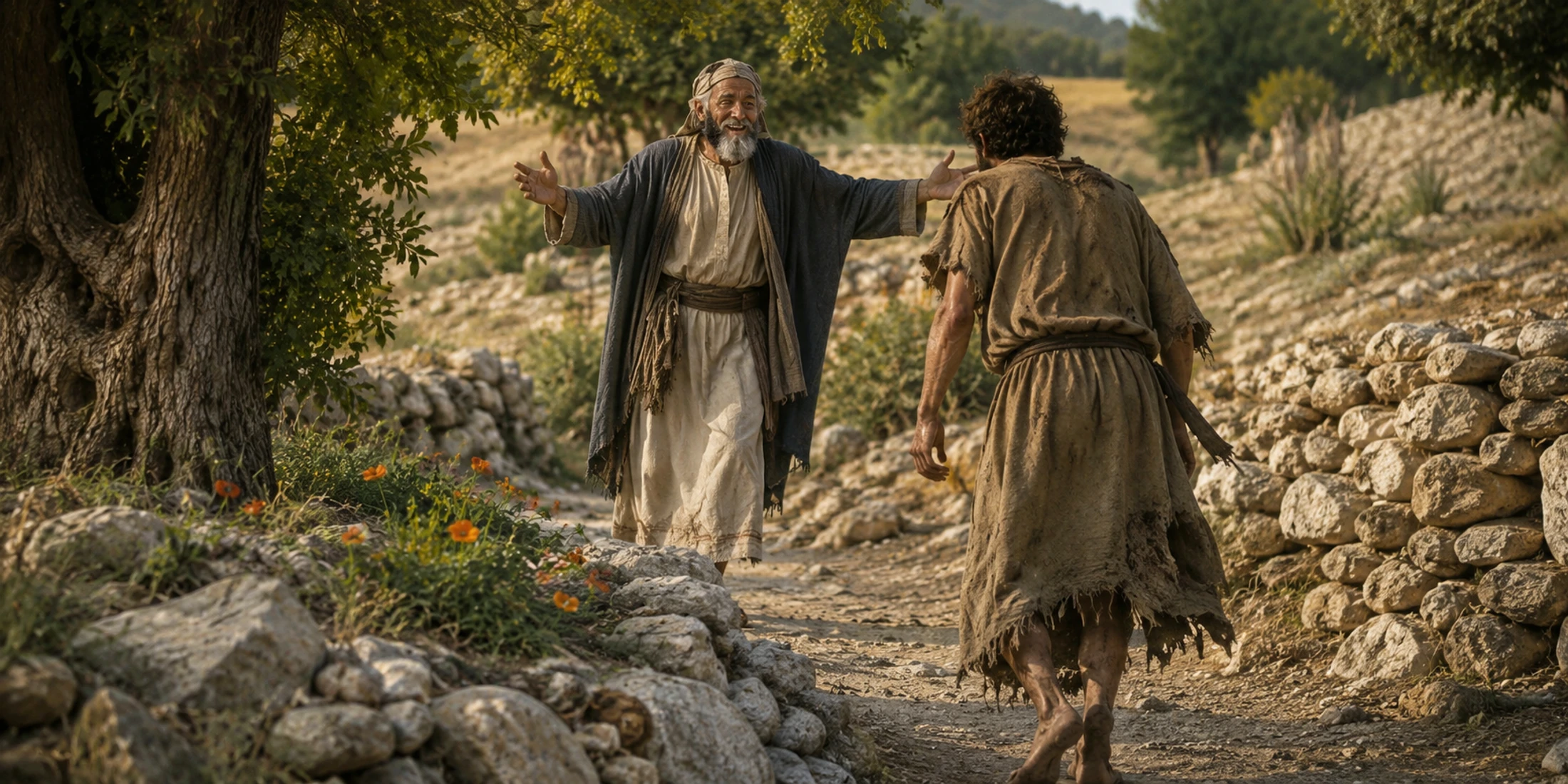
The story of the Prodigal Son is very familiar to most Christians. I think it strikes a chord with all of us because there have been times in our lives when we have taken the love of our Heavenly Father for granted – His watch care, His peace, His guidance, His tenderness and love, His patience with us, and most importantly, His forgiveness.
We continually want to go our own way thinking we know best. We plan. We make lists. We become impatient and want more now. We are jealous of others’ success. Our lack of gratitude for what we have breeds discontent which can lead to all kinds of sin – greed, covetousness, adultery, cheating, dishonesty in our financial dealings, and an overabundance of debt. We basically tell our Heavenly Father that His gracious touch on our lives isn’t enough.
We all know the story – how the Prodigal son strays and wastes all of his inheritance – all he had been so freely given. Eventually, he is literally brought to his knees in the mud feeding pigs, even stooping to the thought of eating their food. Finally, he realizes even the workers at his father’s house have plenty of bread, and he decides to go home thinking his father may accept him as a servant because he is no longer worthy to be called a son.
As the prodigal son returns home, the part of the story that so deeply touches our heart is our mental picture of his father running to meet him when he sees his son coming afar off. I have always felt I would run as well if I saw one of my wonderful sons returning home under these circumstances.
I recently, however, was made aware of two historical references that shed some new insight regarding this part of the story. First, in Jewish culture, when a child squandered his family inheritance among foreigners or non-Jews and tried to return, the village could perform a public shaming ritual called Kezazah (meaning cutting off). The elders would meet the offender at the city gate, break a large pot at his feet, and declare him permanently banished from the community. Secondly, in Jewish culture, it was considered deeply undignified and shameful for a respected adult man, especially an elder or patriarch, to run in public.
With that insight, here are some additional thoughts about why Jesus included in the story the picture of the precious father running to meet his son. First of all, the father probably wanted to meet his son and forgive him before the village saw the son returning. If the village had met the prodigal son first, he might have been banished forever. Isn’t Christ continually calling the lost to Him before Satan gets to banish them from God forever?
Secondly, the father was totally oblivious to any shame he might receive for running in such an undignified manner. His entire focus was on loving and forgiving his son. As we know, he even killed the fatted calf and gave his son a beautiful robe and ring, totally accepting him back into the family – back into the father’s “kingdom,” with all the blessings that come from such redeeming forgiveness. Likewise, Christ went to the cross for us bearing the shame and scorn that so cruelly fell upon Him – He willingly took on our shame and, wonderfully with that sacrifice, He accepts us back into His Kingdom and provides us with all the riches of Heaven!!
My heart now can picture our Heavenly Father running towards us with a love that overcomes our sinful nature and gives us eternal hope. Our part is to realize we must run to Him.